

Diabetic Foot Care
Diabetic Foot Check: Warning Signs You Should Not Ignore
A small blister or callus can become a bigger problem when diabetes affects feeling, circulation, or healing.

What to look for
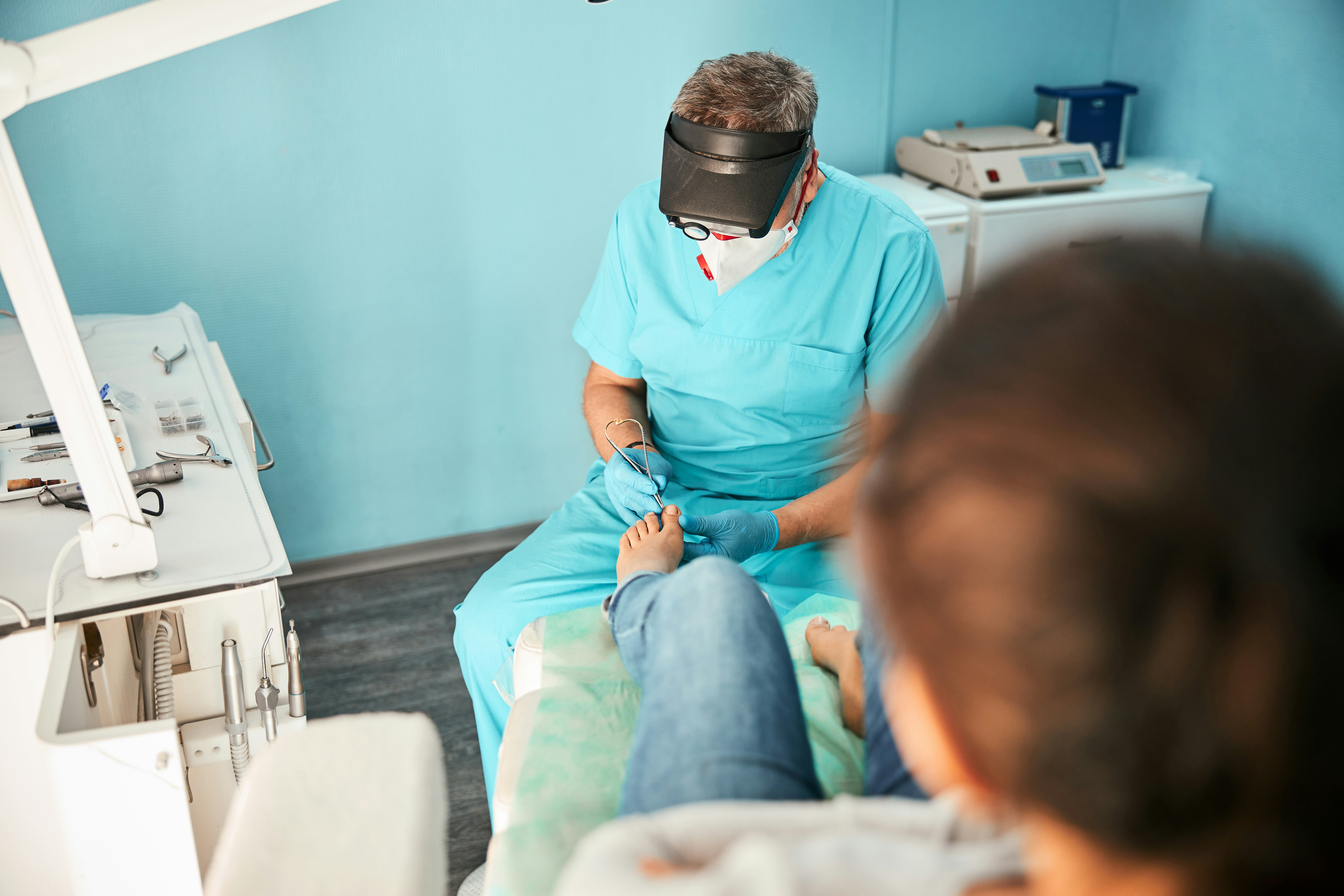
Check the soles, heels, between toes, nail edges, and pressure spots. Use a mirror or ask for help if needed.
Why small changes matter
Reduced feeling can make a blister, callus, or cut easy to miss. Early care can reduce the chance of a larger wound problem.
When to call
Call for wounds, drainage, spreading redness, swelling, color change, new numbness, or a callus that looks different.
Relevant Pages
Preventive exams, circulation checks, wounds, and high-risk foot care.
Condition Corns and CallusesPressure spots, thick skin, and pain from footwear or foot structure.
Condition Fungal ToenailsThick, discolored, brittle nails and treatment options for nail fungus.
Treatment Diabetic Foot CarePreventive care, routine checks, and support for high-risk feet.
Treatment Wound CareCare pathways for ulcers, wounds, and diabetic foot risk.
Treatment Treatment OptionsStretching, footwear changes, padding, taping, braces, and guided home care.
Need Help With This Foot Problem?
Request an appointment with Carolina Podiatry Center or call (828) 327-3029 to confirm scheduling details.